China’s aluminum window industry has expanded rapidly, driven by urban renovation, energy-efficient buildings, and demand for slimmer frames. The China Building Energy Conservation Association reports that building operations consume a significant share of national energy use, making window performance increasingly important. A window is not only a frame and pane. It is a working building component.
What factors influence the service life of aluminum doors and windows? The answer includes alloy quality, surface treatment, drainage design, hardware durability, installation accuracy, and maintenance. Reports from the International Aluminium Institute show that aluminum remains highly recyclable and naturally forms a protective oxide layer. However, this protection is not unlimited. Coastal salt, industrial pollution, trapped moisture, and poor coating adhesion can accelerate corrosion. Small drainage holes matter. Blocked tracks can hold water against seals for months.
Industry guidance from AAMA and FGIA emphasizes testing for air leakage, water penetration, structural performance, and hardware operation. These tests provide useful evidence, but laboratory performance cannot fully predict every building site. That is an uncomfortable limitation. A high-quality window may still fail early when installers force the frame into an uneven opening or leave protective film exposed to sunlight.
This article examines China’s top ten aluminum window manufacturers through practical service-life factors. It considers material standards, coating systems, thermal breaks, sealant quality, fabrication controls, installation experience, and after-sales support. Product rankings alone can mislead. Real durability is visible years later, when the handle still closes smoothly and rainwater still drains away.
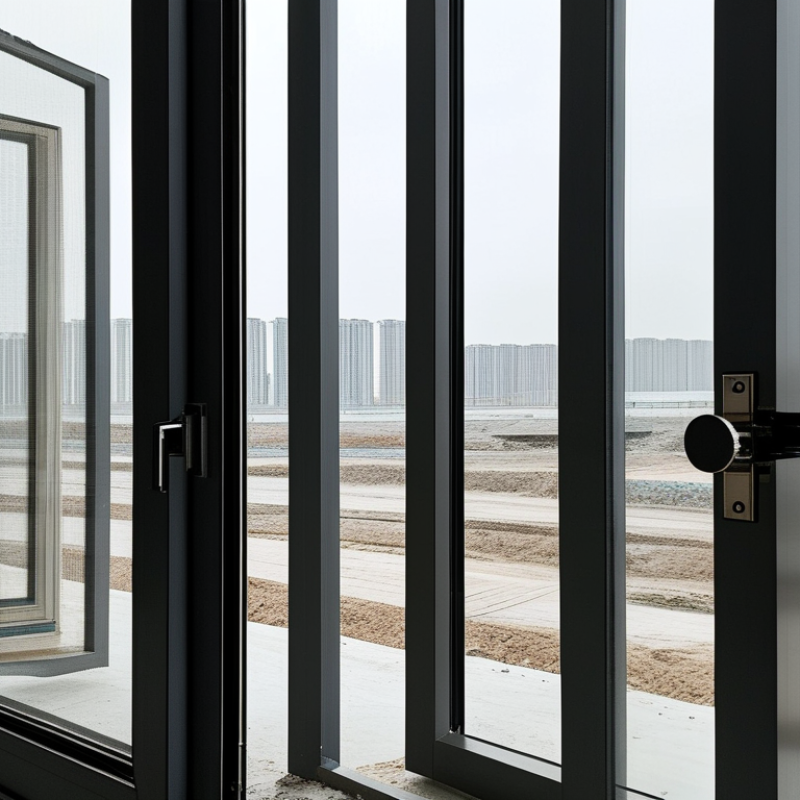
China’s ten widely used aluminum window types include casement, sliding, tilt-and-turn, awning, fixed, folding, lift-and-slide, louver, corner, and thermal-break windows. Each design serves a different building need. Casement windows suit apartments and offices because their seals close tightly. Sliding windows save space on balconies. Lift-and-slide systems support wider openings, but they need stronger rollers and accurate installation. Fixed windows provide daylight without ventilation.
The market remains substantial. The International Aluminium Institute reported that China produced about 59% of global primary aluminum in 2023. This supply base supports large construction demand and many profile choices. Industry research also identifies thermal insulation, energy prices, and renovation activity as major market drivers.
Yet, a “top ten” ranking is not perfectly objective. Regional climate, opening size, and project budgets change customer preferences. Service life depends on more than aluminum thickness. Drainage, powder coating quality, hardware wear, salt exposure, and daily operation matter greatly. A neglected track can fail before the frame.
Tips: Check wall exposure before choosing a design. Coastal projects need stronger corrosion protection. Ask for coating test records, hardware cycle data, and drainage details. Keep weep holes clear. Clean tracks every few months. A beautiful window can still age badly when installation tolerances are ignored. End users often overlook this practical weakness.
For China’s top aluminum windows, 6063-T5 profiles balance easy extrusion, moderate strength, and clean surface finishing. ASTM B221 data commonly lists tensile strength near 150 MPa and yield strength near 110 MPa, though values vary with wall thickness and section size. Strength matters. Wall thickness improves stiffness, not corrosion resistance. A 1.4 mm frame may suit a small opening, but larger spans need structural calculations for wind pressure. Increasing thickness to 2.0 mm can reduce deflection, yet it also adds weight and cost.
Corrosion begins quietly around cut ends, drainage holes, and fasteners. ISO 9223 classifies coastal air as more aggressive because of chloride exposure. The International Aluminium Institute reports that aluminum forms a protective oxide film, but this film performs poorly when pollutants, salt, and trapped moisture remain on the surface. Anodizing or qualified powder coating adds protection. AAMA 2605 testing evaluates coating durability through accelerated weathering and corrosion resistance; it is evidence of performance, not a guaranteed service-life number.
Installation decides much of the real outcome. Inspectors should check sealed joints, open drainage paths, and dissimilar-metal contact. Small details matter. Thermal movement also needs allowance, especially on dark frames facing strong sunlight. A thicker profile cannot repair poor drainage or careless cutting. This point is often underestimated. Site conditions, cleaning frequency, coating quality, and maintenance records should be reviewed together before predicting service life.
6063-T5 aluminum profiles are widely used for architectural extrusions. The chart shows commonly referenced minimum mechanical values for 6063-T5: tensile strength of approximately 160 MPa, yield strength of approximately 110 MPa, and elongation of approximately 8%. Profile wall thickness is not a fixed alloy property; thicker and well-designed sections generally provide better stiffness and resistance to local damage. Actual service life also depends on drainage design, protective surface treatment, fastener compatibility, installation quality, and exposure to moisture or salt.
China’s top aluminum windows are judged by more than frame strength. The glass, gaskets, and hardware decide daily comfort and long-term performance. The U.S. Department of Energy reports that windows can cause 25%–30% of residential heating and cooling energy use. A low U-value helps, but it can mislead without a warm-edge spacer and an effective thermal break.
Air leakage deserves equal attention. ENERGY STAR criteria commonly require window air leakage no higher than 0.3 cfm/ft² under standard testing. Poorly compressed gaskets, uneven sash alignment, or careless installation can increase drafts. Water finds gaps. EPDM or silicone gaskets should resist ultraviolet exposure, compression set, and seasonal temperature changes. Field inspection matters because laboratory performance is not always repeated on a windy building site.
Hardware often reveals the real service life. EN 12400 durability classifications include 100,000 opening and closing cycles, but this figure is a test level, not an automatic lifetime promise. Hinges, rollers, locks, and fasteners need correct loading and regular adjustment. A busy apartment entrance may reach 100,000 cycles quickly. Residential windows may not. That assumption deserves scrutiny. Project buyers should request test reports showing cycle count, air leakage, water tightness, and U-value together. Missing records are a warning sign, even when the aluminum surface looks flawless.
| No. | Service-Life Factor | Key Technical Metric | Typical Target or Reference Value | Effect on Durability | Recommended Verification |
|---|---|---|---|---|---|
| 1 | Aluminum Alloy and Wall Thickness | Profile strength, dimensional stability, and corrosion resistance | Thermally broken architectural profiles commonly use alloy systems such as 6063; wall thickness must meet the project specification and applicable local standard | Insufficient section strength may cause sash deflection, poor sealing, hardware stress, and premature adjustment problems | Check material certificates, profile drawings, thickness measurements, coating quality, and structural calculations |
| 2 | Glass Configuration | Glass thickness, heat treatment, spacer, and edge-seal quality | Double insulating glass typically includes two panes with a sealed cavity; low-emissivity coatings and inert-gas filling can improve thermal performance | Correct glass selection reduces thermal stress, condensation risk, noise transmission, and load transferred to the frame | Review glass markings, spacer type, seal integrity, gas-fill declarations, and safety-glazing requirements |
| 3 | Window U-Value | Whole-window thermal transmittance, Uw | Approximately 1.2–2.0 W/m²·K is a common performance range for many thermally broken double-glazed systems; lower values indicate better insulation | Lower Uw reduces interior condensation potential and temperature-related movement, helping protect seals and finishes | Use declared or independently calculated Uw based on the complete frame, glass, spacer, and size configuration |
| 4 | Gasket Material | Resistance to compression set, ozone, ultraviolet radiation, and temperature changes | EPDM and high-quality silicone are commonly selected for demanding exterior applications; the correct grade depends on climate and design | A durable gasket maintains contact pressure and reduces air, water, and sound leakage over time | Inspect material documentation, corner joints, compression, elasticity, surface cracking, and compatibility with sealants |
| 5 | Air Leakage | Air leakage rate at a specified pressure difference | A lower test result is better; project requirements are often specified using applicable classes or limits under standards such as ASTM E283 or EN 12207 | Excessive leakage increases drafts, moisture movement, energy loss, and long-term gasket and hardware loading | Test a representative window assembly after installation, including frame joints, operable vents, and perimeter interfaces |
| 6 | Water Tightness and Drainage | Pressure resistance, weep-hole design, and sill drainage path | Performance must be matched to local wind-driven rain exposure; drainage openings should remain unobstructed | Poor drainage can cause corrosion, sealant failure, staining, concealed moisture damage, and deterioration of adjacent materials | Carry out water-penetration testing and inspect sill slopes, end dams, drainage slots, and installation membranes |
| 7 | Hardware Load Capacity | Hinge, roller, lock, handle, and fastener capacity relative to sash weight | Hardware capacity should exceed the calculated sash load with an appropriate safety margin; heavy insulating glass requires careful selection | Correctly sized hardware limits sagging, misalignment, handle damage, and uneven gasket compression | Compare hardware ratings with actual sash mass, opening size, wind load, and operating frequency |
| 8 | Operating-Cycle Durability | Repeated opening, closing, locking, and tilting cycles | 100,000 cycles is a recognized high-durability reference point for many tested operable window systems; the actual requirement depends on the standard and window type | Higher cycle endurance indicates better resistance to wear, loosening, roller fatigue, handle failure, and seal compression changes | Request a laboratory durability report identifying cycle count, sash mass, hardware mode, test sequence, and post-test performance |
| 9 | Surface Finish and Corrosion Protection | Coating thickness, adhesion, color stability, and resistance to salt or pollution | Finish selection should reflect exposure: inland, coastal, industrial, and high-UV environments require different protection levels | A suitable finish protects the aluminum from corrosion, chalking, fading, and surface degradation | Check coating specifications, adhesion, visual uniformity, exposed cut edges, dissimilar-metal contact, and site exposure category |
| 10 | Installation and Maintenance | Frame alignment, perimeter sealing, drainage clearance, cleaning, and lubrication | The frame should be plumb, level, square, securely fastened, and sealed according to the system design; routine inspection is normally recommended at least annually | Correct installation and preventive care often have a greater practical effect on service life than any single component specification | Inspect fasteners, sealants, gaskets, hardware, drainage paths, and operating force; clean and lubricate only with compatible products |
When comparing China’s top ten aluminum windows, service life depends on more than frame strength. Installation quality often decides whether a good window performs well. A level opening keeps the sash aligned and reduces stress on hinges. Small errors matter. I have seen uneven shims create gaps that appeared months later.
Effective drainage is equally important. The sill should direct rainwater toward clear exterior weep holes. Mortar, dust, or excess sealant can block these paths. Water then collects inside the frame and may stain finishes or damage nearby walls. Installers should check drainage with controlled water testing before interior finishing begins.
Wind exposure also affects long-term performance. Larger windows need suitable reinforcement, anchors, and spacing for local wind loads. Coastal buildings face stronger gusts, salt air, and frequent storms. Seal aging adds another risk. Ultraviolet light, heat, cold, and repeated movement can harden or crack perimeter seals. A flexible seal today may become brittle years later. Inspect corners, joints, and drainage openings during routine maintenance. Replacing worn seals early is usually simpler than repairing concealed moisture damage. A perfect installation is never guaranteed. Careful inspection remains necessary.
Aluminum window service life depends on testing, installation, climate, and maintenance. EN 12207 measures air permeability through a closed window. Lower leakage usually means better comfort and energy performance. EN 12210 evaluates resistance to wind load. Test pressure can reveal frame movement, sash deformation, or hardware weakness. These results describe performance at testing time, not a guaranteed number of years.
Water penetration also deserves attention, although EN 12208 is often overlooked. A window may pass air and wind tests but still leak around its drainage paths. Test samples should match the proposed size, glazing, seals, and hardware. Small laboratory units can hide real installation problems. That matters on tall buildings and exposed coastal elevations.
Coating durability data adds another layer. Review coating thickness, adhesion, color change, gloss retention, and corrosion results after accelerated exposure. Salt-spray results alone can be misleading. They do not perfectly reproduce sunlight, humidity cycles, or polluted rain. Ask for data linked to the intended environment, such as urban, industrial, or marine exposure. Inspectors should also check cut edges, corners, drainage holes, and sealant contact areas. These details often fail before the main aluminum surface. I have seen attractive samples age poorly when cleaning schedules were ignored. Testing is valuable, but the installation record may tell the harder truth.
: Casement windows close tightly and suit apartments or offices. They provide ventilation and strong sealing. Small details matter.
Sliding windows save space on balconies and narrow rooms. Their sashes move horizontally without projecting outward. Clean the tracks regularly.
Lift-and-slide windows support wider openings and larger glass panels. They need strong rollers, accurate installation, and careful alignment. Installation can be unforgiving.
No. Fixed windows provide daylight but cannot open for fresh air. They work well beside opening windows or in areas needing more glass.
Coastal buildings need stronger corrosion protection because salt air accelerates surface damage. Use suitable anodizing or qualified powder coating. Keep drainage holes clear.
No. Greater thickness can improve stiffness and reduce deflection. However, it also increases weight and cost. Large openings still require structural calculations.
Blocked drainage, poor sealing, worn hardware, and careless installation create frequent problems. Mortar or excess sealant can trap water inside the sill. A beautiful frame can still age badly.
Inspect joints, corners, seals, tracks, and drainage openings during routine maintenance. Clean tracks every few months and replace brittle seals early. Perfect installation is never guaranteed.
China’s top 10 aluminum window types cover a wide range of designs and applications, including sliding, casement, tilt-and-turn, folding, awning, fixed, and thermally insulated systems. Their service life depends on more than profile selection. 6063-T5 aluminum profiles provide a useful balance of strength, weight, and corrosion resistance, while profile thickness and proper surface protection affect long-term stability. Glass selection, gasket quality, and hardware performance also influence thermal insulation, U-value, air leakage, security, and operating smoothness over repeated use.
What factors influence the service life of aluminum doors and windows? Key factors include professional installation, effective drainage, suitable wind-load design, and the climate conditions surrounding the building. Heat, humidity, salt exposure, temperature changes, and ultraviolet radiation can accelerate seal aging and coating wear. Reliable products should be evaluated through service-life testing, including air-permeability classification under EN 12207, resistance to wind load under EN 12210, hardware endurance of up to 100,000 cycles, and coating durability data. A combination of sound design, quality materials, and regular maintenance helps maximize performance and lifespan.

Envi Window