Top 10 Tips for Safe Aluminum Doors and Windows

Time:2026-09-24 Author:Henry
0%

Aluminum doors and windows add strength, light, and a clean architectural appearance to homes and commercial buildings. Their safety, however, depends on more than the metal frame. Glass selection, locking points, hinges, installation quality, drainage, and regular maintenance all influence daily protection. Small details matter. A loose screw or poorly aligned sash can gradually create a serious weakness.

This guide explains How to ensure the safety performance of aluminum doors and windows through practical, evidence-based checks. It considers frame thickness, hardware durability, impact resistance, weather sealing, ventilation, and emergency access. In professional inspections, installers should compare products with applicable building codes and recognized testing requirements. Certified components provide stronger assurance than attractive claims printed in a brochure. Local conditions also matter. Coastal air can accelerate corrosion, while strong winds may demand reinforced frames and laminated glass.

The ten tips are designed for homeowners, designers, contractors, and property managers. They connect product selection with real installation and maintenance practices. Check the corners closely. Test every lock. Watch for moisture marks, rattling glass, or unusual friction during opening. These signs should not be ignored. Even experienced teams can overlook small alignment problems during a busy project. That is worth admitting. A perfect checklist does not replace careful observation or qualified advice. When safety affects children, older residents, or emergency evacuation, professional assessment becomes especially valuable. With informed choices and routine checks, aluminum doors and windows can remain secure, stable, and dependable for years.
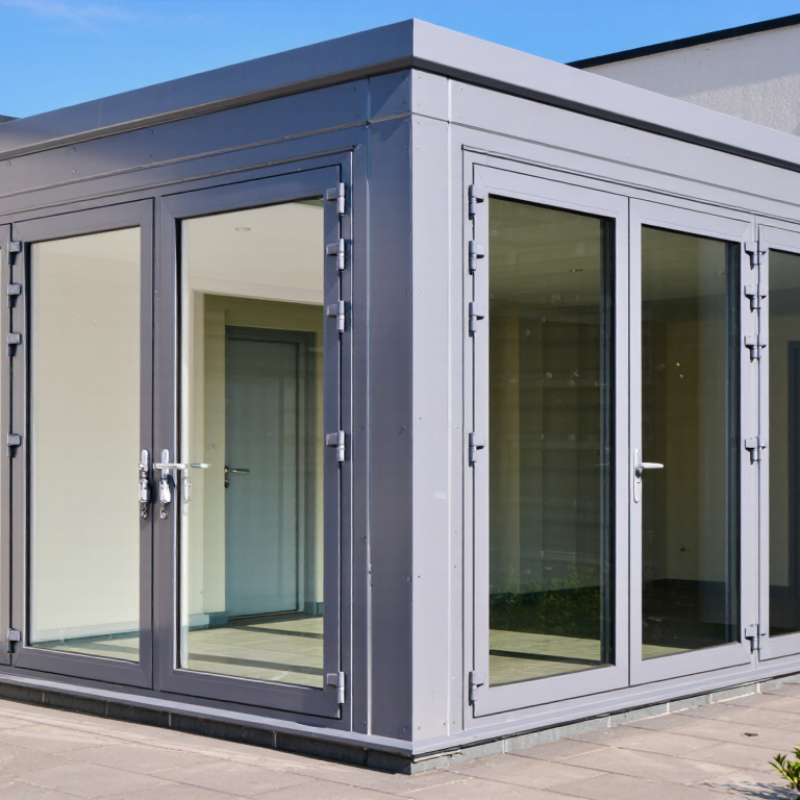
Top 10 Tips for Safe Aluminum Doors and Windows

Assess Site Risks Against ASCE 7 Wind-Load Requirements

Top 10 Tips for Safe Aluminum Doors and Windows

Assess Site Risks Against ASCE 7 Wind-Load Requirements

Wind safety starts with the actual site, not a regional rule of thumb. ASCE/SEI 7-22 provides mapped wind speeds and procedures for calculating design wind pressures. The required inputs include risk category, exposure, building height, enclosure classification, and topographic effects. A coastal home on an open bluff may face different pressures from a similar home sheltered by dense buildings inland. Check the project’s exact location and governing code edition. Small assumptions matter.

NOAA recorded 28 U.S. billion-dollar weather and climate disasters in 2023, with estimated losses of $92.9 billion. That figure is not a window-design value, but it shows why local hazard assessment deserves care.

Have a qualified designer determine component-and-cladding pressures around corners, roof edges, and large openings. Then verify that each aluminum frame, anchor, and installation detail is rated for the specified loads. Ask for test documentation, not just a general product claim. Check substrate strength, too: a strong frame cannot compensate for weak masonry or poorly spaced fasteners. Inspect seals and drainage paths after installation. I would not assume an older building’s sheltered appearance means low exposure; nearby trees and structures can change, and that judgment can be wrong.

Confirm Frame Strength, Anchors, and ASTM E330 Structural Ratings

Top 10 Tips for Safe Aluminum Doors and Windows

Confirm Frame Strength, Anchors, and ASTM E330 Structural Ratings

A safe aluminum door or window begins with a frame that resists movement. Check the aluminum profile, corner joints, mullions, and reinforcement before installation. Thin sections may look neat but fail under strong wind pressure. Ask for engineering data, not only attractive product photos.

ASTM E330 testing measures structural performance under uniform static air pressure. It can show deflection, permanent deformation, or frame failure. However, the rating does not guarantee correct installation. Match the tested pressure to the project’s wind requirements and exposure. A qualified engineer should review unusual building heights, large openings, and coastal conditions.

Anchors deserve equal attention. Fasteners must suit the substrate, spacing, edge distances, and expected loads. Masonry, concrete, and light-gauge framing require different solutions. Keep anchors aligned with reinforced frame zones. Loose screws, oversized holes, or missing shims can weaken the assembly. Small gaps matter.

Inspectors often find strong frames installed with weak anchors. That contradiction is easy to miss. A rating alone is not enough. Review the complete test report and installation instructions. Confirm whether the tested specimen included the same glass, hardware, joints, and anchoring method. Field conditions may differ. Recheck plumb, level, and fastener torque before finishing the perimeter seal. No checklist catches every mistake. Careful review still reduces avoidable failures.

Specify Safety Glazing Under 16 CFR 1201 and ANSI Z97.1

Safety glazing is not a decorative upgrade. It is a key specification for doors and windows near people. Under 16 CFR Part 1201, CPSC impact testing distinguishes Category I glazing, tested at 150 foot-pounds, from Category II, tested at 400 foot-pounds. ANSI Z97.1 also sets impact-performance classes; its Class A test level is 400 foot-pounds. These figures describe test impacts, not a guarantee that glass cannot break.

Check the applicable building code and the exact opening location before ordering. Common risk areas include sliding doors, sidelights, and glazing beside a bathtub or stair landing.

Ask the supplier for documentation identifying the glass type and the standard it meets. A small permanent mark can help confirm compliance after installation, but verify that the mark matches the paperwork. Details matter.

Tempered glass and laminated glass can both serve as safety glazing, but they behave differently when damaged. Tempered glass breaks into small pieces; laminated glass generally holds fragments within its interlayer. Choose based on the hazard, code requirements, and project conditions—not appearance alone.

CPSC’s 16 CFR 1201 test categories provide measurable impact thresholds, yet installation quality still matters. A compliant pane in a poorly fitted frame is not a complete safety plan. I would double-check the specification; it is easy to overlook one narrow sidelight.

Maintain Emergency Egress: 5.7 sq. ft. Opening, 20-In. Width, 24-In. Height

Top 10 Tips for Safe Aluminum Doors and Windows

Emergency egress depends on the clear opening, not the frame size. Measure the space a person can actually pass through. A 20-inch width and 24-inch height are common minimum dimensions, but they create only 480 square inches. That equals about 3.33 square feet, not 5.7 square feet. If your requirement is 5.7 square feet, the opening must be larger than those minimum dimensions. Always confirm the applicable local safety standard before installation.

I have seen windows that looked wide enough until the sash, screen, and hardware reduced the usable space. Remove obstructions during measurement. Open the window fully without tools, excessive force, or complicated steps. Check whether furniture, curtains, or security bars block the exit path. A clear path matters.

Test it in real conditions. Use a tape measure at the narrowest points. Inspect the hinges, rollers, locks, and handles for smooth operation. Aluminum frames should remain firmly anchored, with no loose corners or sharp damage. Do not rely only on product labels or rough-opening measurements. A second inspection is wise, because small errors can become serious during an emergency. Local inspectors or qualified installers can verify the final clear opening and operation.

Test Air and Water Performance Using ASTM E283 and ASTM E331

Top 10 Tips for Safe Aluminum Doors and Windows

Air and water testing should be part of every serious aluminum door and window inspection. ASTM E283 measures air leakage through the assembled unit under a controlled pressure difference. ASTM E331 checks water penetration while air pressure and uniform water spray are applied. These tests reveal problems that visual inspections often miss.

Tip: Test the complete assembly, not only the aluminum frame. Include glass, seals, hardware, joints, and installation interfaces. A small gap near the sill can create visible water inside the room. Confirm the pressure difference, spray duration, specimen size, and test conditions before starting. Results are meaningful only when recorded accurately.

Tip: Review the installation before testing. Clean the drainage paths and inspect corners closely. Do not seal a suspected defect just to obtain a better result. That approach hides risk. I have seen teams trust a clean report too quickly, although the tested sample did not match the installed units. Keep photographs, measured leakage, water observations, and corrective actions with the report.

ASTM E283 and ASTM E331 do not replace good design or field judgment. They provide controlled evidence about performance. Repeat testing after major changes, including new gaskets, glazing methods, or fasteners. Small details matter. A slightly twisted frame can affect both air leakage and water resistance. Reflect on every failure before approving the next installation.

FAQS

What site details affect wind-load requirements for aluminum doors and windows?

Check location, wind speed, risk category, exposure, building height, enclosure, and terrain. Small assumptions can change the required pressure.

Why can two nearby homes need different window designs?

An open bluff receives stronger wind than a sheltered inland site. Nearby buildings and trees can also change airflow. I would not trust appearances alone.

Which parts of a building need extra wind-load attention?

Focus on corners, roof edges, and large openings. These areas often experience higher pressures. They deserve careful review.

What documents should be requested before installing aluminum frames?

Request pressure ratings, impact-test records, and installation details. Confirm that frames, anchors, and fasteners match the specified loads. General claims are not enough.

Why must the wall substrate be checked?

A strong frame cannot fix weak masonry or damaged concrete. Verify substrate strength and fastener spacing. This detail is easy to miss.

What glazing locations commonly require safety glass?

Check sliding doors, narrow sidelights, stair landings, and glazing near bathtubs. People can strike these areas during ordinary movement. Narrow panels deserve attention.

How do tempered and laminated glass differ after breakage?

Tempered glass usually breaks into small pieces. Laminated glass generally keeps fragments attached to an inner layer. Choose according to the hazard, not appearance.

Do impact-test ratings guarantee that glass will never break?

No. Test ratings describe performance under specified impacts. They do not promise unbreakable glass. Installation still matters greatly.

How can compliance be checked after installation?

Match the permanent glass marking with the supplier’s paperwork. Inspect seals, drainage paths, frames, and anchors. Recheck one narrow sidelight; mistakes happen.

Conclusion

How to ensure the safety performance of aluminum doors and windows starts with evaluating the building’s location and exposure to wind, then specifying products and installation details suited to the site’s risks and applicable ASCE 7 wind-load requirements. Verify that frames and anchors provide adequate support, and review structural test results, such as ASTM E330 ratings, to confirm the assembly can withstand expected loads.

Choose safety glazing that meets relevant impact-safety criteria under 16 CFR 1201 and ANSI Z97.1. Keep required emergency escape openings clear and functional, checking for a minimum opening area of 5.7 square feet, a width of 20 inches, and a height of 24 inches where applicable. Finally, assess air leakage and water resistance through ASTM E283 and ASTM E331 testing. Careful specification, installation, and routine inspection help maintain reliable performance over the life of the doors and windows.

Henry

Henry

Henry is a dedicated marketing professional with a profound expertise in the company's offerings. With years of experience in the industry, he possesses an impressive understanding of the market dynamics and consumer behaviors that drive success. Henry is committed to sharing his insights through......