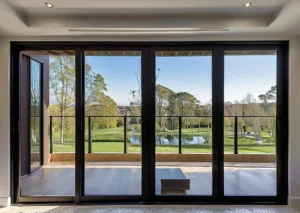
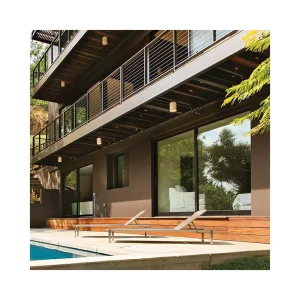
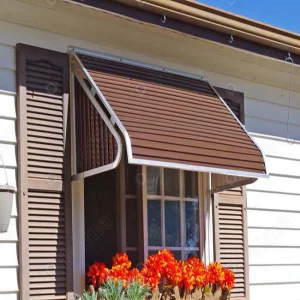
Explore our leading collection of structurally engineered, thermally insulated windows and exterior door systems.
In modern architectural planning, spatial transparency and physical boundary dissolution have transitioned from pure aesthetic preferences to core developmental metrics. Corner windows, representing the peak of high-performance architectural glazing systems, play a defining role in this evolution. Historically challenging due to structural constraints, modern metallurgy and structural silicone technology have enabled corner windows to achieve structural integrity without sacrificing thermal efficiency or wind resistance. This whitepaper analyzes the engineering capabilities, supply chain efficiencies, and global compliance matrices that position China as the leading hub for high-performance corner window fabrication and export.
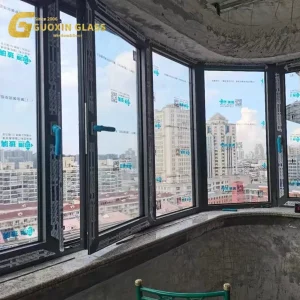
When specifying corner window systems, architects and structural engineers must evaluate the loading conditions of the corner span. We categorize corner windows into two primary engineering profiles:
Glass-to-Glass (Post-Free) Systems: This configuration achieves maximum visual transparency. The two insulated glass units (IGUs) meet at a precise 90-degree angle, structurally bonded with high-tensile silicone sealants (e.g., Dow Corning 995 structural glazing sealant). Glass-to-glass systems eliminate vertical mullions at the corner, creating an unobstructed panoramic view. However, because there is no metal frame supporting the corner joint, all dead loads from structural beams above must be completely diverted using cantilevers. The windows must withstand sheer horizontal wind loads independently.
Structural Column (Framed corner) Systems: This design incorporates a heavy-duty extruded aluminum corner post (often reinforced with internal steel inserts or carbon fiber sleeves). While it places a visual element at the corner intersection, it significantly increases load-bearing capacity. This enables larger total heights and spans, making it ideal for high-rise commercial structures and seismic zones.
A major challenge with corner fenestration is the "corner effect," where thermal bridging can lead to condensation and heat loss. To combat this, high-performance systems utilize thermal break aluminum profiles featuring multi-chambered polyamide barrier strips (such as Technoform insulation blocks). These strips mechanically isolate the exterior aluminum face from the interior face, disrupting the conductive path.
In addition to thermally broken frames, the choice of glass fills is critical:
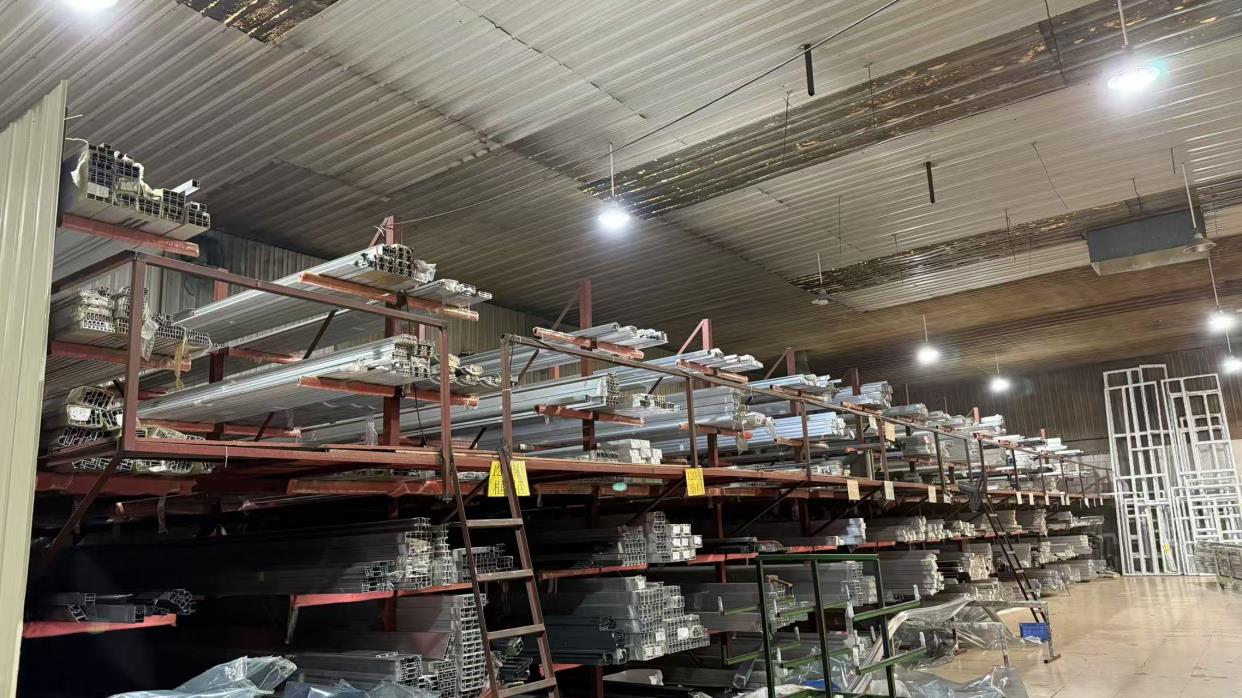
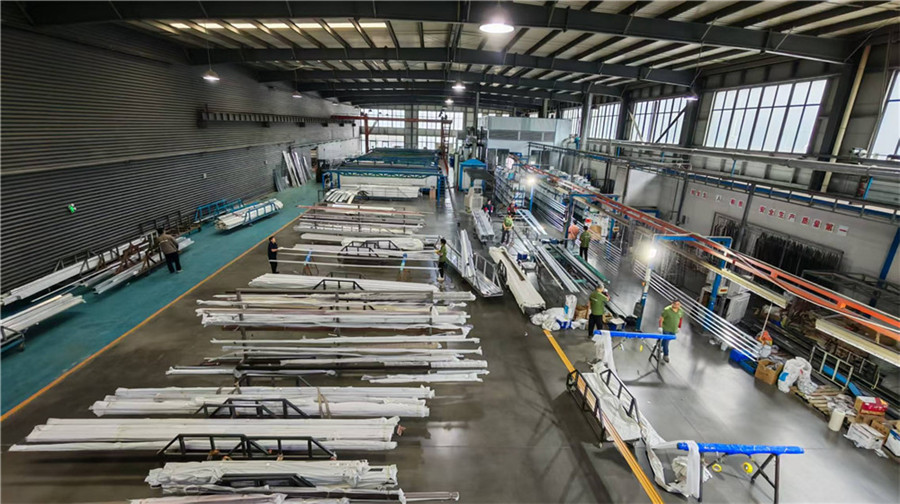
Sourcing corner windows from China offers significant cost-to-performance advantages, thanks to integrated supply chain ecosystems. Founded in 1993, with our specialized doors and windows division established in 2014, Shandong Envi Doors and Windows Co., Ltd. represents the standard of Chinese manufacturing. Spanning over 100,000 square meters, our facility integrates raw material billet extrusion, surface finish treatment, and high-precision assembly under one roof.
With heavy machinery ranging from 600-ton to 2500-ton extrusion presses, we control the metallurgical consistency of our structural aluminum alloys. Our automated setup includes two anodizing lines, two electrophoretic coating lines, and a color powder spraying profile line. This ensures every corner system matches strict aesthetic designs while maintaining the surface integrity needed to withstand marine weathering, high UV indexes, and heavy rain.
Operating custom alloy thermal processes from 600T to 2500T to guarantee profile thickness and yield strength exceed ASTM B221 specifications.
Offering premium anodizing, electrophoretic sealing, and AkzoNobel powder coatings for over 15 years of atmospheric durability.
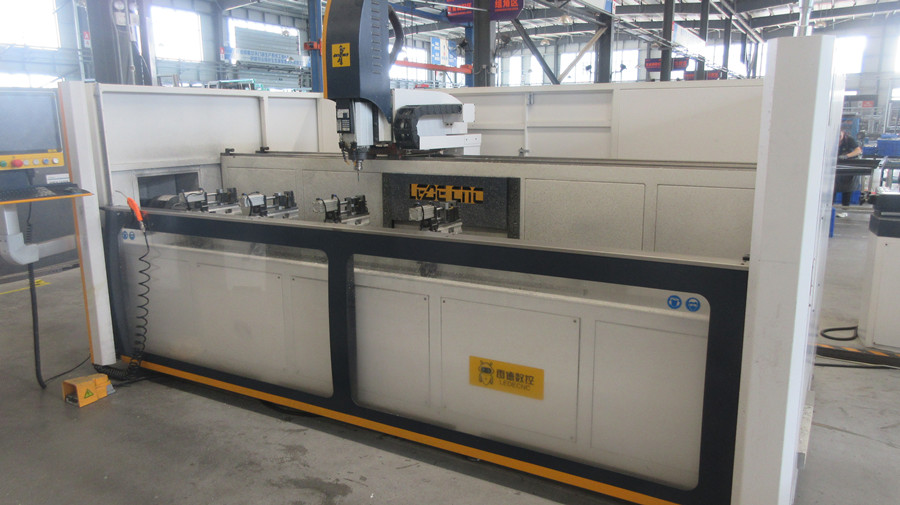
Using advanced Yalian milling and punching technology to guarantee tolerance errors within 0.2mm for seamless 90-degree corner joints.
Global engineering firms require strict compliance with localized structural and environmental regulations. Exporting high-end architectural glazing systems involves navigating complex regional certifications:
North American Standards (NFRC & AAMA): Windows exported to the United States and Canada must satisfy the requirements of the American Architectural Manufacturers Association (AAMA) and the National Fenestration Rating Council (NFRC). The NFRC validates U-factors, Solar Heat Gain Coefficient (SHGC), and Visible Transmittance (VT). For wind-prone coastal areas like Florida, windows must undergo structural testing (ASTM E330) and show resistance to wind-borne debris impact to qualify for Florida Building Code (FBC) approval.
Australian Standards (AS2047 & AS1288): Imports into Oceania must comply with AS2047, which covers wind deflection, water penetration, and air infiltration. High-rise developments in Australia must also meet AS1288 standards for structural safety glass.
European Standards (CE Mark / EN 14351-1): The European Union requires CE marking for all external windows and doors. This confirms safety, environmental protection, and energy conservation properties across the European Economic Area.
From alloy extrusion to multi-point quality inspections, our facility ensures structural reliability at every stage.
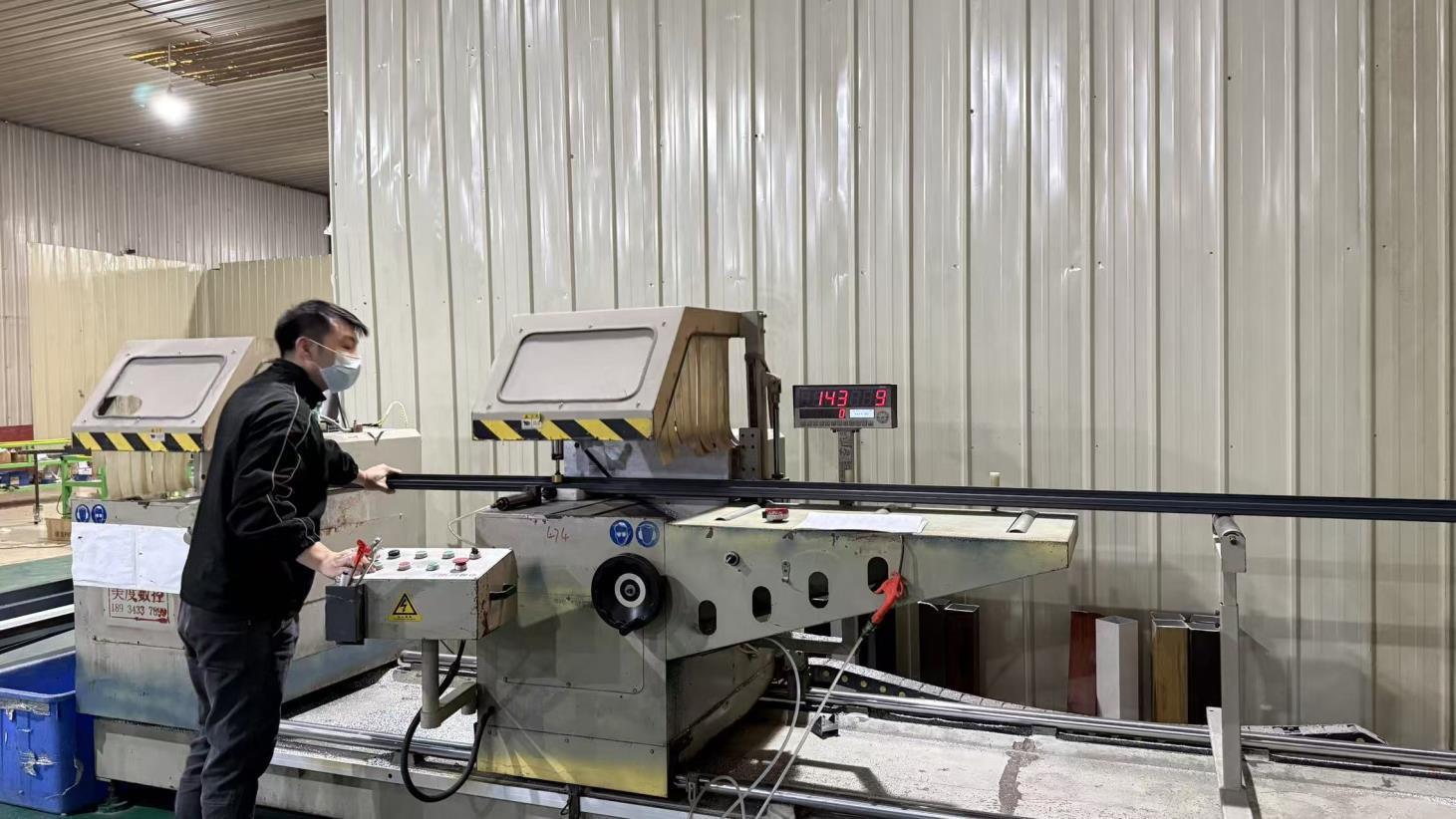
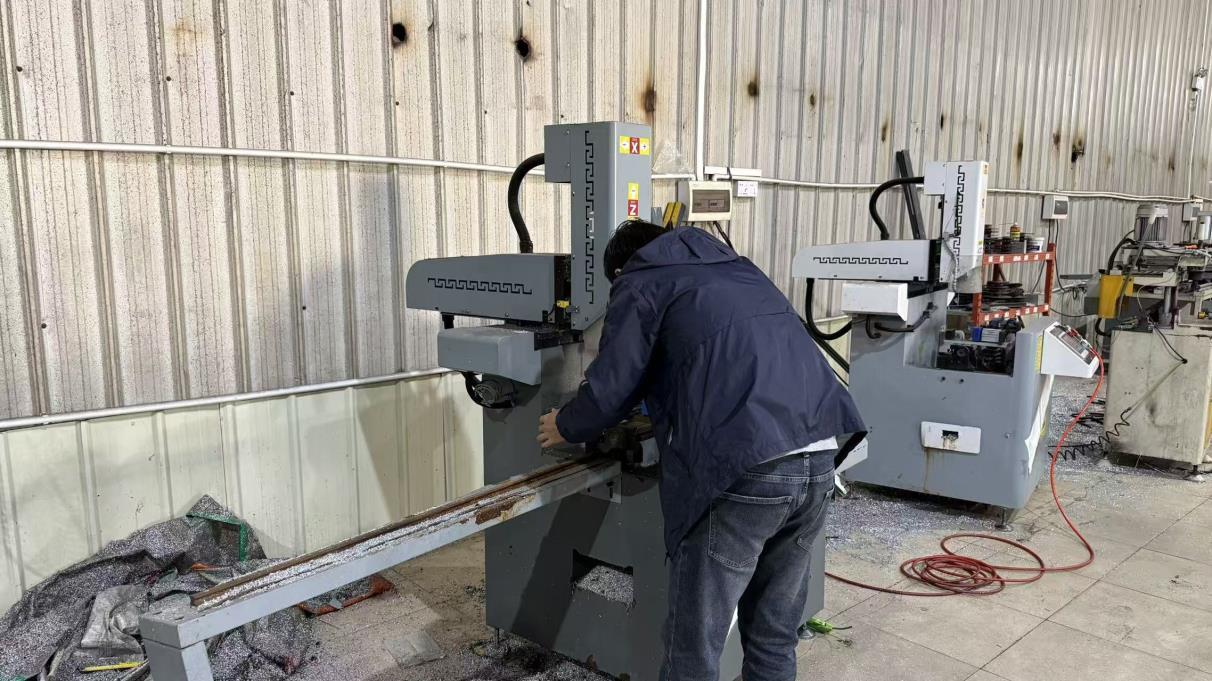
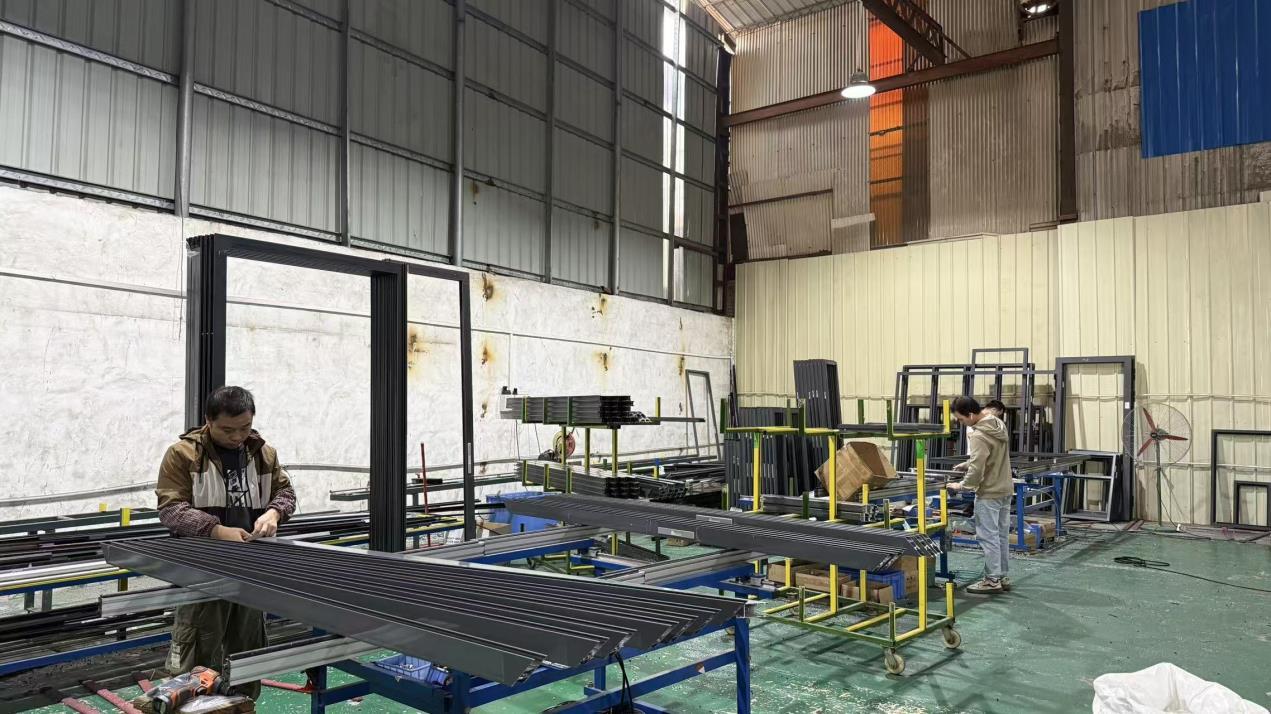
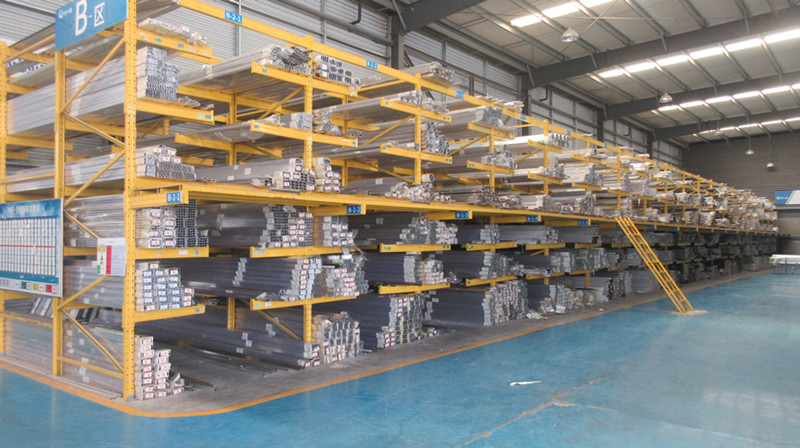
Corner window systems are engineered to perform in various localized structural and climatic applications:
Coastal Luxury Residential: These projects require high resistance to saltwater spray and heavy wind loads. We construct our frames from corrosion-resistant 6063-T6 aluminum, treated with electrophoretic paint or specialized powder coatings. For tropical storm zones like the Caribbean and Florida, we combine structural corner columns with double-laminated PVB hurricane-resistant glass to meet strict building codes.
Urban High-Rise Condominiums: In tall residential towers, managing high-altitude wind pressure (often exceeding 3000 Pa) and urban noise is critical. Our post-free corner designs use thick, laminated, triple-glazed systems that achieve sound isolation ratings over STC 42, ensuring quiet, energy-efficient living spaces.
Commercial Office Enclosures: Combining structural glass-to-glass butt joints with automated window systems allows developers to maximize natural light and lower artificial heating and cooling costs. This directly supports green building certifications like LEED or BREEAM.
Architectural preferences are shifting toward minimal visible profiles. The development of ultra-slim, thermally broken corner windows allows the structural frame to be recessed directly into the wall cavity, making only the glass-to-glass joint visible.
Furthermore, smart glass integration is changing how we manage heat and light. Electrochromic (smart) glass can automatically tint in response to outdoor temperature and sunlight intensity. This helps reduce solar heat gain in summer, keeping building interiors comfortable and energy-efficient.
Browse our selection of specialized doors, folding systems, and heavy-duty commercial glazing options.
 Envi Window